
Gynecology
Gynecology
This specialty provides medical monitoring for women, from puberty to menopause, as well as the management of all conditions of the genital system, whether medical or surgical.
The department also manages maternity, obstetrics and reproductive medicine services .
This specialty provides medical monitoring for women, from puberty to menopause, as well as the management of all conditions of the genital system, whether medical or surgical.
The department also manages maternity, obstetrics and reproductive medicine services .


Consultations & Team
Service composition
- 1 Hospital Practitioner · Head of Department
- 2 University Professors · Hospital Practitioners
- 18 Hospital Practitioners
- 1 Head of Clinic at the Universities · Assistant at the Hospitals
- 74 Midwives
- 4 State-Certified Nurses
- 44 Caregivers
- 18 Hospital Service Agents
- 16 Secretaries
- 4 Midwifery Healthcare Professionals
- 1 Nursing Supervisor
- 1 Senior Midwife
- 2 Psychologists


Our services
Activities
It includes consultations by appointment (gynecology, ultrasound, colposcopy, hysteroscopy, anesthesia, sexology, psychology…) carried out by hospital doctors, attached practitioners, midwives and psychologists.
The outpatient unit is equipped with high-level ultrasound scanners (2D, 3D, 4D and color Doppler).
The Gynecology-Obstetrics Emergency Department (UGO) is located at the entrance to the delivery rooms. Midwives and doctors are available there 24/7 to receive patients with gynecological problems (miscarriages, pain, etc.) or problems related to maternity.
Location : Access via the pediatric-gynecology-obstetrics emergency department, East side – elevator dedicated to the UGO delivery room .
The team of this gynecological surgery unit, composed of gynecological surgeons, anesthesiologists, nurses, nursing assistants and hospital service agents, welcomes patients admitted for an intervention via laparoscopy, laparotomy or vaginal route.
Surgery for benign conditions (prolapse, urinary incontinence, fibroids, endometriosis) using minimally invasive laparoscopic techniques, as well as surgery for gynecological cancers (uterus, ovaries, vulva), are particularly well-developed there. The monitoring and treatment of gynecological infectious diseases (such as herpes, endometritis, salpingitis, etc.) are also provided.
The gynecology operating room:
The gynecology operating rooms provide 24/7 care for gynecological and obstetric emergencies as well as scheduled procedures.
In France, a Voluntary Termination of Pregnancy can be carried out up to 14 weeks of pregnancy (16 weeks of amenorrhea) .
Family planning doctors and outpatient surgery nurses take care of women wishing to have an abortion, in accordance with current legislation.
The process for a woman requesting an abortion in the family planning unit is as follows:
- Two medical consultations are required , but there is no longer a mandatory 7-day waiting period between them. If you wish, the first consultation can be with your general practitioner or midwife, who will provide you with a certificate of initial application.
- During this family planning consultation, the doctor answers questions, performs an ultrasound to date the pregnancy and presents, depending on the stage of pregnancy, the different abortion techniques.
- During the second consultation, the date of the abortion will be scheduled. It will take place either at the hospital in the outpatient surgery department or at home. Unless there is a specific contraindication or the department's protocol dictates otherwise, the choice of abortion method is left to the woman.
- A consultationabortion is scheduled 3 to 4 weeks later. If the method is medical, this consultation must take place in the family planning unit. In the case of a surgical abortion, the patient has the choice of healthcare provider (general practitioner, gynecologist, midwife, sexual health center, or in the family planning unit).
Any patient can request anonymity; she indicates this when making the appointment.
The law requires that the minor be accompanied by an adult of her choice and that she undergo a psychosocial interview (inquire at the sexual health center at 02 14 47 50 47) which will be documented.
The entire process is explained in the information booklet.

Perimenopause (formerly called "premenopause") is a transitional period defined by the WHO as: "the period beginning when the firstclinical and/or biological signs appear that announce the onset of menopause; it ends at least one year after the last menstrual period." It is caused by a hormonal imbalance, alternating between phases with "too much estrogen" (breast tenderness, abnormal bleeding) and phases with "not enough estrogen" (hot flashes).
Menopause is the cessation of ovarian function and the permanent end of menstruation. It is considered established when menstruation has ceased for one year without any hormonal treatment. The average age of menopause is 50, with a possible age range between 40 and 56. A woman's life expectancy is 85 years. Therefore, a woman lives more than a third of her life in menopause.
The consequences of menopause are as follows :
- General symptoms impacting quality of life. They occur relatively quickly: Hot flashes and night sweats, affecting 70 to 80% of menopausal women, joint pain, decreased libido (reduced sexual desire), dry skin, hair loss, sleep disturbances, fatigue, mood swings, memory problems, weight gain (mainly abdominal).
- GSUM : Genitourinary Syndrome of Menopause, linked to vaginal dryness or atrophy. It explains painful penetration during sexual intercourse, sometimes urinary incontinence.
- The health consequences appear later: weakened bones (osteoporosis), diabetes, increased cholesterol and cardiovascular complications (high blood pressure, heart attack)
Menopause management must be comprehensive:
- Hygiene and dietary guidelines: balanced diet and regular physical activity
- Local estrogen and/or lubricant may be prescribed if there is vulvar discomfort and sexual dysfunction
- Hormone replacement therapy (HRT) may be prescribed if a woman's quality of life is severely impaired, but it must be prescribed after a risk-benefit assessment has been conducted for each patient. Therefore, this treatment should be prescribed on a case-by-case basis, at the lowest effective dose and for the shortest possible duration. HRT is also effective in preventing osteoporosis and lowering cholesterol.
- Monthly vitamin D supplementation
- Other treatments may be prescribed, but studies show they are less effective than HRT : Homeopathy, Dietary supplements, Herbal medicine
- This care must be multidisciplinary: general practitioner, gynecologist, cardiologist, rheumatologist, endocrinologist, dermatologist, psychologist…
What the Caen Normandy University Hospital offers for the management of menopause :
- A menopause center established in 2003. Its primary goal is to provide care for menopausal women with complex situations. Its aim is to thoroughly assess their expectations, symptoms, and medical conditions, and then offer personalized, comprehensive, and tailored care through a multidisciplinary and specialized approach. The advantages and disadvantages of potential hormone therapy are presented and explained. This care is provided in collaboration with the patient's primary care physician.
Useful document(s)

Assistance during childbirth

Follow-up to Prenatal Diagnosis

Screening for Down syndrome

Endometriosis

Orthogenics Booklet

Robot-Assisted Laparoscopy

Designation of trusted person

Recording support

Pre-OP Consent

Tumor removal

Myomectomy

Mammography

Hysteroscopy

Vaginal hysterectomy

Laparoscopic hysterectomy

Abdominal hysterectomy

Cervical smear screening
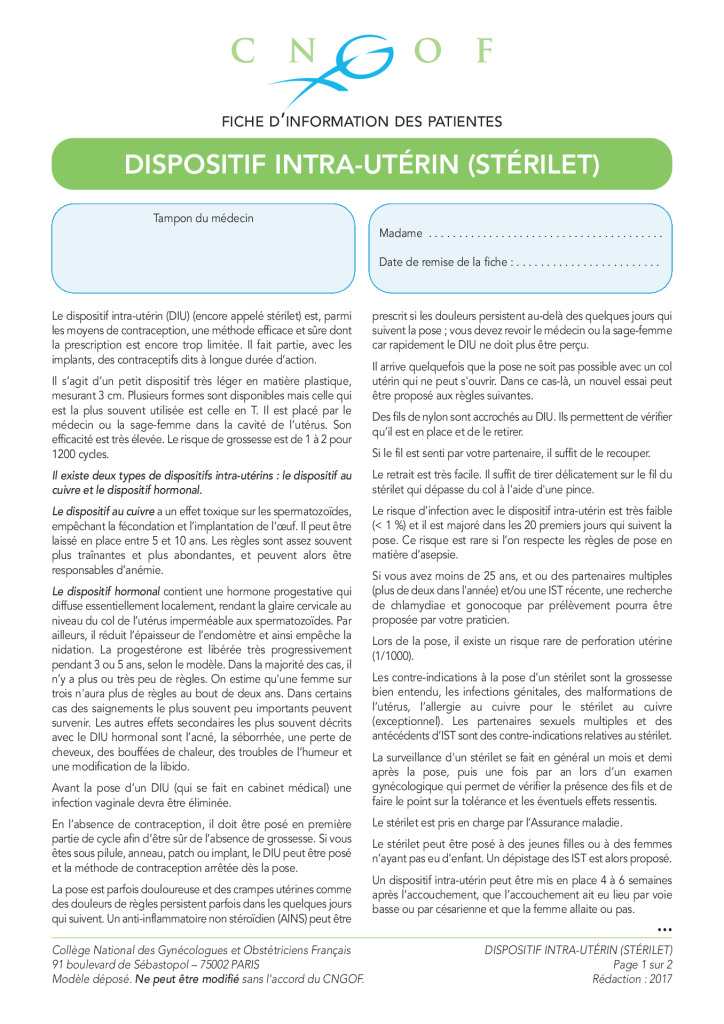
Intrauterine Device

Genital prolapse

Genital prolapse

Treatment for stress urinary incontinence

Conization

Laparoscopy

Essure Device Removal

Menopause

Preserving one's fertility
Transverse structures


The reproductive medicine service aims to provide care for couples experiencing difficulties in starting a pregnancy.
Competence Center and AMP Center
Rare Disease Competence Center | Center page | |
Structure | Center page | |
Structure | Center page |
The latest news related to the service…
 | Uterine cancer: 3D surgery to help patientsNews from June 17, 2024 | Green June |
 | 3 questions for psychologists in gynecology and obstetrics departments about perinatal bereavementNews from October 15, 2025 | Raising awareness about perinatal bereavement |

Women's and Children's Hospital - Hematology
Gynecology

Main Access


