
Reproductive medicine
Reproductive medicine
The reproductive medicine service aims to provide care for couples experiencing difficulties in starting a pregnancy.
It is a section of the Gynecology.
The reproductive medicine service aims to provide care for couples experiencing difficulties in starting a pregnancy.
It is a section of the Gynecology.
Consultations & Team
- Healthcare professional
- All healthcare professionals
- ARE Dr. Anne-Laure Lepori
- ARE Dr. Delastre Robin
- ARE Dr Denis Sousa Da Silva
- ARE Dr. Mathilde Lermuzeaux
- ARE Dr. Pierre Grassin
- ARE Dr Stephanie Deryckere
- ARE Dr. Therese Simonet
- By Céline Renard
- Dr. Alice Lecacheur
- Dr. Amélie Ancelle
- Dr. Amélie Scornet
- Dr. Anne-Sophie Gilles
- Dr. Antoine Clergeau
- Dr. Christine Denoual-Ziad
- Dr. Claire Gourbesville
- Dr. Clémence Guillin
- Dr. Cécile Delesalle
- Dr. Cécile Desoubeaux
- Dr. Céline Renard
- Dr. Fabienne Bottet
- Dr. Marie-Ange Clarotti
- Dr. Marion Labarre
- Dr. Meriem Mouadil
- Dr. Sophie Lubrano
- Dr. Stanislas Mulot de Lacroix
- Ps Christine Albert
- Ps Delphine Quiedeville
- Ps Laura Dumesnil
- Sf Anne-Christine Paris
- Sf Gaétane Colin
- Sf Patricia Rault
Acupuncture
Embryo reception and double gamete donation
Addiction Medicine
Andrologists · Male infertility
Anesthesia
Biology
Egg donation
Sperm donation
Gynecology Assisted Reproductive Technology
Female fertility preservation
Psychology
Transgender identity
Service composition
- 8 hospital practitioners
- 1 attached practitioner
- 1 junior doctor
- 3 psychologists
- 1 senior midwife
- 3 midwives
- 4 secretaries
- 6 laboratory technicians

Our services
Throughout their treatment, couples will need guidance on the different stages necessary for the formation of an embryo that can develop in the woman's uterus and ultimately lead to the birth of a child.
Each stage of the treatment mirrors the normal stages of human reproduction, adding the necessary support to overcome the existing obstacle within the couple:
- Natural female hormonal stimulation
- Ovulation
- Estrogen secretion by the ovary
- Sperm migration in the genital tract
- Formation of an embryo in the fallopian tube
- Arrival of the embryo in the uterus
- Implantation of the embryo in the uterus
For more information on the principles of reproduction, consult the website of the French Biomedicine Agency.
Among couples currently forming in France, 1 in 6 experiences difficulties conceiving. The reproductive medicine service aims to provide care for these couples. After an assessment, the most appropriate treatment for your situation can be offered.
Gynecologists, biologists, midwives, laboratory technicians, and nursing assistants provide medical, administrative, and psychological support to infertile couples.
Biologists also provide embryo freezing, the reception of donated embryos for infertile couples, and egg donation.
Depending on the findings during your assessment and follow-up, your doctor may suggest the following:
- ovulation stimulation,
- intrauterine insemination,
- In-Vitro Fertilization (IVF),
- In-vitro fertilization with intracytoplasmic sperm injection (ICSI),
- a sperm donation,
- egg donation [See Learn more > “Donating your eggs” above],
- an embryo reception.
What is an oocyte?
The oocyte is the female reproductive cell (the male reproductive cell being the sperm). Each ovary contains several thousand oocytes present from birth, the number of which gradually decreases throughout life. From puberty onwards, each month, about ten oocytes develop, culminating in the ovulation of a single one, which can then be fertilized by a sperm.
Who should I give it to?
Eggs are donated to couples who cannot have children:
- either because the woman does not naturally produce oocytes,
- either because her oocytes have abnormalities,
- either because, in order to be treated for a serious illness, she underwent treatment that destroyed her oocytes,
- either because the couple risks transmitting a serious genetic disease to the child.
Who can donate*?
- adult woman
- aged under 37
- healthy
*For women who have not had children, the possibility of donation is mentioned in the law passed in July 2011 and is awaiting the implementing decree.
The different stages of the donation process:
- To make an appointment, please call: 02 31 27 20 59
- meeting with a doctor
- meeting with a psychologist
- ovarian stimulation
- egg retrieval
The number of IVF procedures performed per year is 500.
For more information on In-Vitro Fertilization, see our practical guide to undergoing IVF below.
The reproductive medicine and biology center allows patients to undergo fertility preservation. This preservation can be carried out in two contexts:
- On medical advice : in the presence of certain pathologies or treatments that may temporarily or permanently impair fertility,
- Without medical indication : self-preservation of gametes in patients aged 29 to 37 years, also called societal preservation.
Within our center, different preservation methods are offered.
- Oocyte cryopreservation will be performed after hormonal stimulation and oocyte retrieval in the operating room.
- Embryo cryopreservation will be performed after hormonal stimulation, oocyte retrieval and after in vitro fertilization.
- Ovarian cortex cryopreservation is a surgical technique involving the removal of ovarian cortex.
- In vitro maturation can be carried out in certain specific cases
As part of fertility preservation, the initial assessment includes blood tests and a pelvic ultrasound. Oocyte cryopreservation is the technique used. The oocytes can be reused by the patient if she does not conceive spontaneously or if other assisted reproductive technologies (ART) fail. This technique offers patients added security but cannot guarantee a future pregnancy.
In the context of a medical indication, the choice of technique will depend on the patient's intrinsic parameters, the pathology indicating preservation, the planned treatment, and the available timeframe. The benefit of medical fertility preservation is to offer an additional option to patients desiring pregnancy after their condition has been treated. The reuse of oocytes, embryos (corresponding to fertility preservation for the couple and reusable only within the couple), or ovarian cortex will be considered if a spontaneous pregnancy does not occur or after other assisted reproductive technologies (ART) have failed.
For more information on the different fertility preservation methods, you can visit the following website
Pathologies
Ovarian problems
Polycystic ovary syndrome (PCOS):
disrupted ovarian function that prevents ovulation during a menstrual cycle. A decrease in the frequency or even absence of menstruation is common. Excessive weight gain is often associated with this condition.
Ovarian dysfunction with ovulation disorder :
hormonal imbalance of variable origin, not allowing ovulation in each cycle.
Ovarian insufficiency:
a slowing of ovarian function which, in most cases, is related to a woman's age, but can sometimes occur earlier. This leads to a decrease in the ovary's ability to produce one or more good-quality follicles each month.
Cervical problem
In women, the cervical mucus can hinder the passage of sperm into the uterine cavity and fallopian tubes. In men, the number of viable sperm may be reduced.
In these situations, the sperm cannot penetrate the cervix. Intrauterine insemination can solve this problem, as the prepared sperm will be deposited directly into the uterus.
Tubal problems
Partial or total obstruction of the fallopian tubes following an infection for example, removal of one or more fallopian tubes for medical reasons, not allowing the passage of gametes in order to obtain natural fertilization.
Abnormalities in the number, viability, and shape of sperm
A more or less pronounced difficulty in the testicle producing sperm, of varying origin:
- due to an attack from childhood (cryptorchidism),
- due to injury during a urinary or testicular infection,
- through direct trauma to the testicle (leisure activities, surgery),
- due to genetic anomaly,
- through the use of toxic substances (tobacco, alcohol, cannabis, professional solvents…),
- through excessive exposure to heat.
Depending on the severity of the sperm abnormalities, the assisted reproductive technology may vary: intrauterine insemination, IVF, ICSI, sperm freezing, use of donor sperm in extreme cases.
Fertility preservation
Reproductive medicine and biology services allow patients to undergo fertility preservation. This preservation can be carried out in two contexts:
- On medical advice: in the presence of certain pathologies or treatments that may temporarily or permanently impair fertility,
- Without medical indication: self-preservation of gametes in patients aged 29 to 37 years, also called societal preservation.
Within our center, different preservation methods are offered.
- Oocyte cryopreservation will be performed after hormonal stimulation and oocyte retrieval in the operating room.
- Embryo cryopreservation will be performed after hormonal stimulation, oocyte retrieval and after in vitro fertilization.
- Ovarian cortex cryopreservation is a surgical technique involving the removal of ovarian cortex.
- In vitro oocyte maturation
As part of fertility preservation, the initial assessment includes blood tests and a pelvic ultrasound. Oocyte cryopreservation is the technique used. The oocytes can be reused by the patient if she does not conceive spontaneously or if other assisted reproductive technologies (ART) fail. This technique offers patients added security but cannot guarantee a future pregnancy.
In the context of a medical indication, the choice of technique will depend on the patient's intrinsic parameters, the pathology indicating preservation, the planned treatment, and the available timeframe. The benefit of medical fertility preservation is to offer an additional option to patients desiring pregnancy after their condition has been treated. The reuse of oocytes, embryos (corresponding to fertility preservation for the couple and reusable only within the couple), or ovarian cortex will be considered if a spontaneous pregnancy does not occur or after other assisted reproductive technologies (ART) have failed.
For more information on the different methods of fertility preservation you can visit the website of the FrenchAgency for Biomedicine.
Endometriosis
Development of endometrial tissue (normally lining the inside of the uterus) within the abdominal cavity. This causes pain and infertility by affecting various abdominal structures, particularly the ovaries, with the appearance of cysts.
Idiopathic infertility
The couple's infertility remains unexplained despite the tests performed. In vitro fertilization (IVF) could resolve the problem and provide more precise information about the gametes collected and visualized in the Assisted Reproductive Technology (ART) laboratory.
Useful document(s)
Embryo reception

AMP Sperm

AMP In Vitro Fertilization

Procedure for insemination

The IVF process

Preserving one's fertility
Centers of Expertise & Collaborations
Rare Disease Competence Center | Center page | |
Structure | Center page |
Locate / contact the service
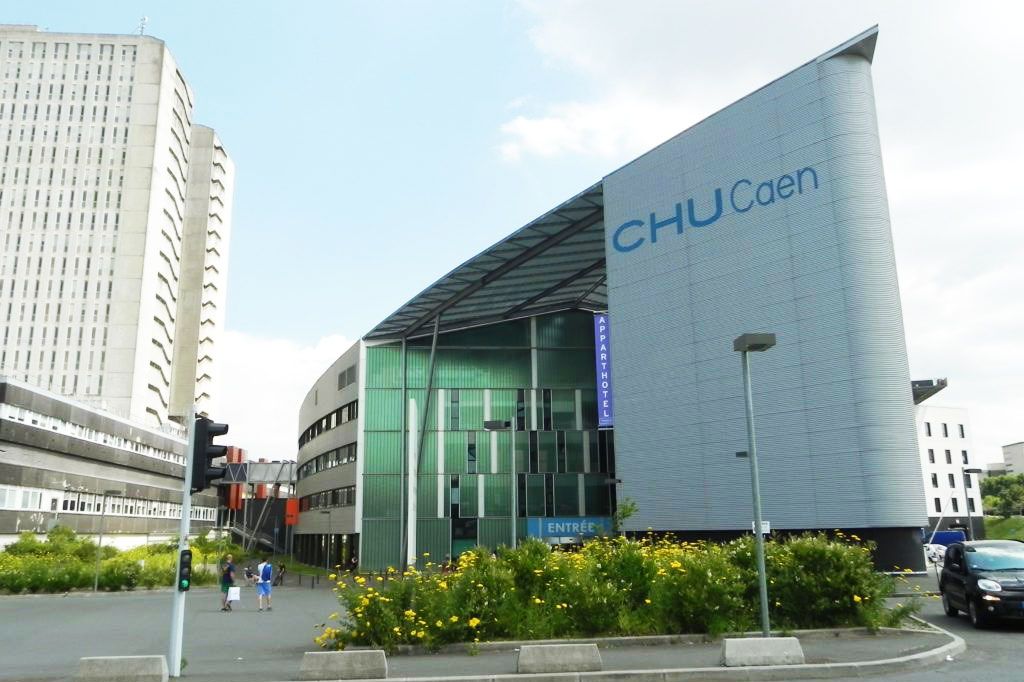
Women's and Children's Hospital - Hematology
Reproductive medicine
Secretariat of the department

| Level | GPS access | Entrance | |||
|---|---|---|---|---|---|
Reproductive medicine Women's and Children's Hospital - Hematology | Level : 2 | GPS access: Main |  |
