
Specialized Obesity Center
There are 42 specialized centers for the treatment of severe obesity in France (metropolitan and overseas territories), including 2 in Normandy (Caen and Rouen). These specialized centers are entrusted with two missions:
- to ensure multidisciplinary care for severe and/or complex obesity
- to organize the "obesity" care pathway in the territory.
The Caen Normandy Specialized Obesity Center ( CSO ) covers the Manche, Orne, and Calvados departments. It offers three pathways: pediatric, adult medical, and adult surgical.
Coordination is provided by a two-person team:
- Medical Coordinator: Dr. Véronique Savey
- Administrative Coordinator: ÉliseMs. Vastel
- Email: centre-obesite@chu-caen.fr
News: Reimbursement for drug treatments (DMT) for obesity
This is an important announcement for patients with obesity: Health Insurance will reimburse the obesity drug treatments Wegovy® (semaglutide) and Mounjaro® (tirzepatide) from June 15, 2026, under certain conditions.
More information: click here!
This good news has generated a significant influx of requests to the CSO (Centre de Soins Œuvres Œuvres) as well as to our partners (private specialists, peripheral hospitals, clinics, and SMRs). Each team is doing its best to organize itself, but longer waiting times are to be expected. Patients already being treated by the teams will be given priority. Thank you for your understanding.

Bariatric surgery meetings.
If you are being treated at the Specialized Obesity Center of the Caen University Hospital and would like to connect with patients who have already undergone surgery, these meetings are organized for you!
Upcoming dates: to be announced.
More information and registration: click here!


- Hospital Practitioner
- Hospital Practitioner
- Dietitian
- Psychologist


- Hospital Practitioner
- Hospital practitioner
- Psychologist
- Psychologist
- Adapted Physical Activity Educator
- Dietitian
- Dietitian
- Dietitian
- Adapted Physical Activity Instructor
- Medical-administrative assistant
- Nurse

- Hospital practitioner
- Hospital practitioner
- Hospital practitioner
- Coordinating Nurse
- Coordinating Nurse

What is a Specialized Obesity Center?
The problem of obesity currently affects almost the entire planet.
In the world
According to a WHO press release dated March 1 , 2024, in 2022, 1 in 8 people worldwide were living with obesity . A new study published in The Lancet shows that in 2022, more than 1 billion people worldwide were living with obesity. Obesity among adults has more than doubled globally since 1990, and obesity among children and adolescents (aged 5 to 9) has quadrupled. The data also shows that 43% of adults were overweight in 2022.
It should be noted that overweight and obesity rank fourthamong risk factors for death, after high blood pressure, dietary risks, and smoking. Indeed, as a chronic, multifactorial, and progressive disease ranging from simple to severe and/or complex obesity, it is a major risk factor for the most common pathologies (cardiovascular diseases, type 2 diabetes, etc.). The psychological and social consequences, such as low self-esteem, depression, and stigmatization, are significant and detrimental.
In France
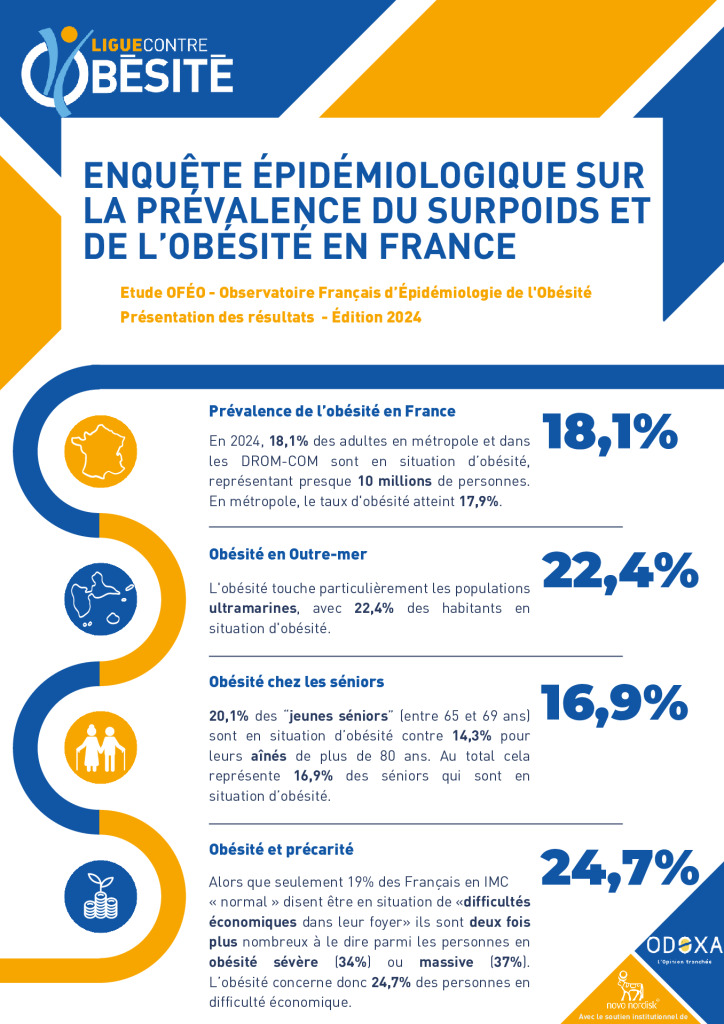
By 2024, nearly half of the French population (48.8%) will be overweight and/or obese. 18.1% of adults in metropolitan France and its overseas departments and territories will be obese, representing almost 10 million people. In metropolitan France, the obesity rate will reach 17.9% (LCO EFEO 2024 study).
The call for projects conducted by the Regional Health Agencies following the instruction of July 29, 2011 relating to the implementation of the National Nutrition and Health Plan 3 and the obesity plan made it possible to identify 37 centers specializing in the management of severe obesity, centers present in metropolitan France and overseas.
The stakes are high, particularly in Normandy.
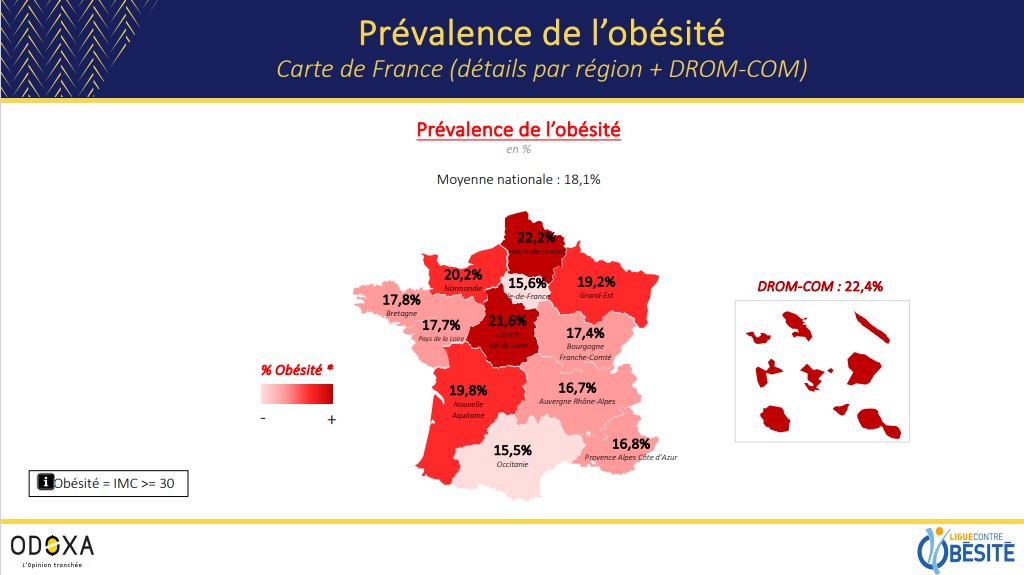
A growing number of Normans are suffering from obesity. According to the latest LCO OFEO 2024 study, Normandy is the thirdmost affected French region (after Hauts-de-France at 22.2% and Centre-Val de Loire at 21.6%) by obesity, with 20.2% of adults obese, compared to the national average of 18.1%. Normandy is experiencing a moderate increase, rising from 19.8% in 2020 (OBEPI 2020) to 20.2% in 2024 (OFEO 2024). Childhood obesity is also a problem.
Two reference centers in Normandy.
The Normandy region, particularly affected by obesity, has been designated two Specialized Obesity Centers: the Caen Normandy University Hospital and the Rouen Normandy University Hospital. Each has the expertise and appropriate equipment required to treat the most complex cases of adult or pediatric obesity, both medically and surgically.
The CSOs intervene in the third-level as defined by the French National Authority for Health (HAS). Details on the three levels of appeal follow.
To make healthcare services accessible and understandable for patients with obesity, these specialized centers are entrusted with two missions, carried out within the framework of national specifications. They operate as third-level regional referral centers:
- 1st mission : to ensure multidisciplinary care for severe and/or complex obesity
Based on:- specific skills: medical teams (nutritionists, endocrinologists, pediatricians, psychiatrists…), paramedical teams (dieticians, adapted physical activity professionals, psychologists, nurses, …) and surgical teams (team of surgeons and anesthesiologists specializing in bariatric surgery).
- and a suitable technical platform.
- SecondThis mission : to organize the obesity care pathway within the region.
is achieved through a process of facilitating and coordinating the multidisciplinary stakeholders involved in managing the disease, including healthcare facilities, private practitioners, social care providers, and associations, in conjunction with networks and general practitioners, and under the auspices of the Regional Health Agencies ( ARS).
This work requires creating momentum and formalizing partnerships by implementing actions that are not directly related to patient care but aim to organize services and disseminate expertise (awareness campaigns, information sessions, training, dissemination of best practice guidelines, etc.).
Furthermore, obesity centers are involved in research. In this context, the Obesity Center (CSO) at the Caen Normandy University Hospital can rely on:
- The Clinical Research and Innovation Department of the Caen Normandy University Hospital
- on the so-called "integrated" center (CIO) of the Lille University Hospital
- on the FORCE (French Obesity Research Center of Excellence) , which is a French network of excellence in clinical research on obesity and associated pathologies.
Our services at the CSO in Caen Normandy
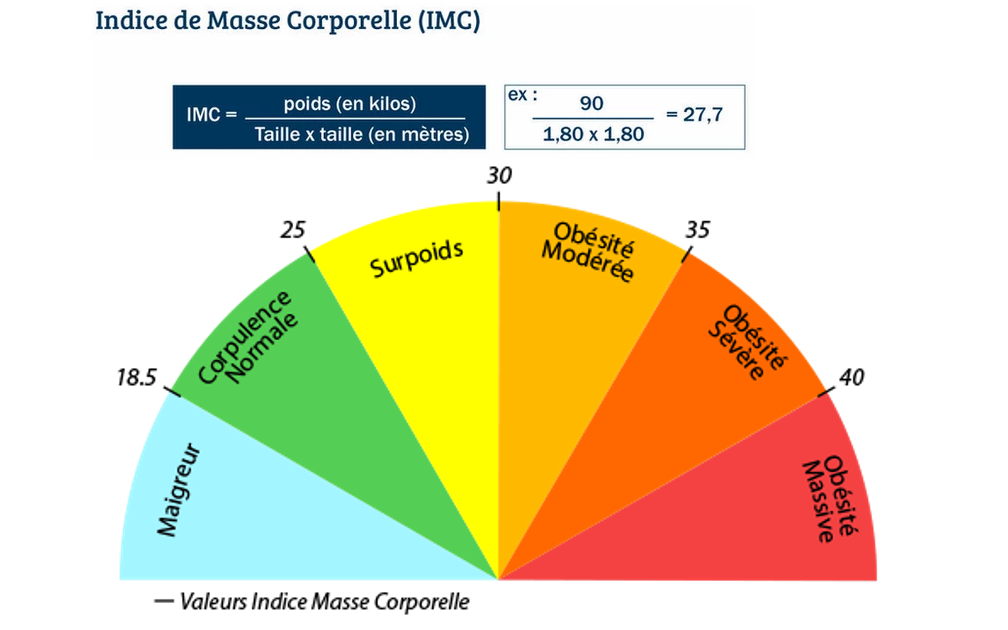
The most commonly used measurement tool for diagnosing obesity is the body mass index (BMI). The body mass index (BMI) takes into account weight and height according to the following formula: BMI = weight (kg) / height² (m)
For overweight adults (BMI between 25.0 and 29.9 kg/m²), hospitalization is not indicated. Overweight management is handled by the primary care physician. International recommendations emphasize the need to stabilize weight through regular physical activity and a balanced diet (see www.manger-bouger.fr). Physical activity is the most important element.
- Calculate your Body Mass Index (BMI) online
- mangerbouger.fr website
- HAS, Guide to the care pathway for overweight and obesity in adults
- The "My Psychological Support" program allows anyone aged 3 and over who is anxious, depressed, or experiencing distress to benefit from 12 psychological support sessions with a partner psychologist, with 60% of the cost covered by Health Insurance.
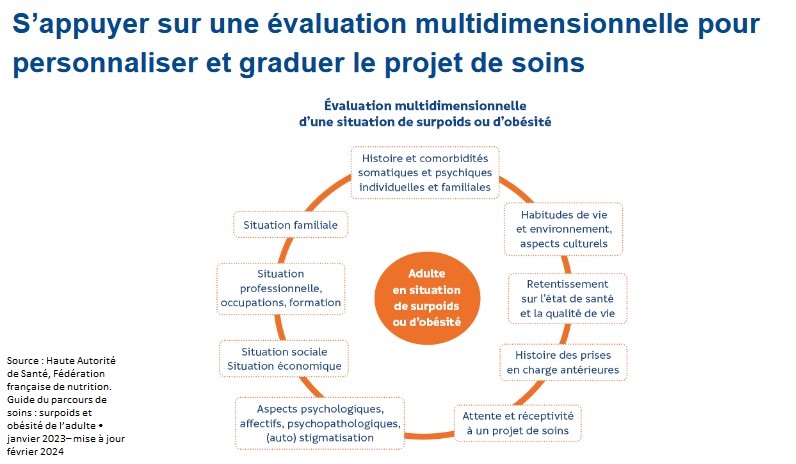
- If your BMI is between 30 and 35 kg/m² : you should first discuss this with your doctor. They can refer you to professionals in their network: a nutritionist or dietitian, a specialist, or a facility offering adapted physical activity, and if necessary, to a psychiatrist or psychologist.
- If your BMI is greater than 35 kg/m²:
The first contact is made via a telephone interview with the CSO. Depending on the information gathered during this conversation, you may be offered treatment at the University Hospital.
Your treatment will begin with an initial inpatient assessment at the CSO (Centre de Soins Œuvres Œuvres) of the Caen Normandie University Hospital. During this day hospitalization you will be supported by a multidisciplinary team for comprehensive and personalized care. You will benefit from individual medical and paramedical evaluations (nurse, psychologist, dietician, and adapted physical activity), as well as group workshops.
The aim of your stay is to screen for obesity-related illnesses and assess your individual situation. You will then be offered a care plan tailored to your needs in consultation with your primary care physician. This may include consultations at the University Hospital (medical and paramedical) , support through the PLANETH Patient therapeutic education platform, and/or care in a medical and rehabilitation facility (SMR : stay partially reimbursed by social security and partially by your supplemental health insurance) , or with independent healthcare professionals offering dietary, psychological, and physical activity support.
- Calculate your Body Mass Index (BMI) online
- National CSO website
- HAS, Guide to the care pathway for overweight and obesity in adults
- The "My Psychological Support" program allows anyone aged 3 and over who is anxious, depressed, or experiencing distress to benefit from 12 psychological support sessions with a partner psychologist, with 60% of the cost covered by Health Insurance
This treatment is reserved for the most severe forms of obesity, in cases where well-conducted medical treatment has failed.
The recommendations of the High Authority of Health authorize adult patients meeting a set of strict conditions (BMI ≥40 kg/m2 or BMI ≥ 35 kg/m2 with a complication likely to be improved after surgery... In the context of poorly controlled diabetes, it can be considered for people with a BMI ≥ 30 kg/m²).
Information brochure for patients considering obesity surgery
This brochure contains explanations about:
- the conditions for benefiting from obesity surgery;
- the different surgical techniques (gastric bypass; sleeve gastrectomy)..
- the organisation of care, from the first interview with the doctor to the follow-up after the intervention;
- the precautions to take to guarantee the best chances of success.
Pre- and post-operative monitoring :
As part of bariatric surgery, you will benefit from lifelong medical and paramedical follow-up not only before but also after surgery, in accordance with the recommendations of the French National Authority for Health (HAS). Optimal pre- and post-surgery care (adapted physical activity, diet, and psychological support) is essential for the long-term success of bariatric surgery, including sustainable weight loss and a reduction in the occurrence of surgical, nutritional, and psychological complications.
It's worth noting that you may be offered an enhanced recovery after surgery (ERAS). The Caen Normandy University Hospital has also been awarded the GRACE (French-Speaking Group for Enhanced Recovery After Surgery) for bariatric surgery. This quality label recognizes the work of a multidisciplinary team whose objective is to support the patient before, during, and after their hospitalization, helping them to recover their functional abilities more quickly and safely after bariatric surgery.
Several reasons to maintain lifelong follow-up:
- Regular follow-up is associated with the lasting success of obesity surgery
- To detect any potential complications occurring some time after the intervention: surgical complications, nutritional deficiencies, psychological difficulties, weight regain, presence of eating disorders, etc.
- Treatments must be adjusted during weight loss, and some may even be contraindicated. Sometimes, during periods of weight regain and recurrence of diseases initially present during obesity, other treatments may be introduced.
- If you are planning a pregnancy, specialized care will be required. It is recommended to wait until significant weight loss is complete, which is typically between 12 and 18 months after the procedure. Nutritional deficiencies are common during weight loss and are exacerbated by pregnancy. It is advisable to use effective contraception before and in the months following the procedure. [Video: Pregnancy after bariatric surgery AP-HP]
- In the event of a reconstructive surgery project
Patient association : In addition, if you wish, you can meet members of a patient association which holds regular office hours in the surgery department and which can support you throughout your journey.
Reconstructive surgery : Finally, plastic and functional surgery may be offered to you. Indeed, significant weight loss can be associated with skin laxity and excess skin, which may lead to considering reconstructive surgery with the aim of reshaping the figure.
Several medications are intended for people with obesity. Their aim is to help the patient lose weight.
The medications currently authorized for marketing (MA) in the treatment of obesity are GLP-1 analogs that mimic the action of digestive hormones, thus affecting appetite and gastric emptying, often resulting in weight loss. They are available in the form of a pre-filled pen containing a solution for subcutaneous injection
- liraglutide (Saxenda®)
- semaglutide (Wegovy®)
- tirzépatide (Mounjaro®)
These weight-loss medications are prescribed only under certain conditions. These medications must be used in conjunction with lifestyle changes to maximize their effectiveness and prevent weight regain.
These are not miracle cures; their effects are limited and wear off after the treatment ends. Each medication has its advantages and risks, which should be discussed with your doctor to choose the most suitable one for your needs. Sustainable weight loss requires long-term lifestyle changes (a balanced diet and regular physical activity, etc.), and medications should be seen as a support to the weight loss process, not a replacement for healthy lifestyle habits.
These medications are called "second-line treatment," meaning that medical care alone will be systematically offered before drug treatment can be considered in case of failure.
The probability that a child who is obese will remain so in adulthood varies according to studies from 20 to 50% before puberty, and from 50 to 70% after puberty.
It is recommended to systematically monitor body mass index in all children and adolescents:
- regardless of their age;
- regardless of their apparent build;
- whatever the reason for the consultation;
- at least 2 or 3 times a year.
some warning signs to look out for:
- Early adiposity rebound (the earlier it is, the higher the risk of becoming obese).
- Continuous upward trend in the BMI since birth.
- Rapid change of BMI curve lane upwards.
If the waist circumference/height ratio is > 0.5, the child has excess abdominal fat associated with an increased cardiovascular and metabolic risk.
The goal of care is to improve quality of life and prevent complications in adulthood.
Regular and prolonged follow-up for a minimum of 2 years is recommended.
It is recommended that the following be taken into account:
- either based on the principles of therapeutic patient education;
- takes into account diet, physical activity and sedentary behavior, the balance of lifestyle rhythms, psychological and socio-economic aspects;
- involves the parents and/or adults responsible for the child or adolescent;
- obtain the support of the child or adolescent and their family, taking care not to make them feel guilty, hurt them or stigmatize them.
3 levels of support:
- Firstresort : uncomplicated overweight. Local care provided by the usual doctor.
- Secondrecourse : complicated overweight or simple obesity. Multidisciplinary care organized on a territorial scale, involving specialized professionals.
- Thirdrecourse : obesity + severe comorbidities / disability. Care organized on a regional scale and coordinated by a specialist doctor and team.
Areas of focus:
Always in contact with the attending physician, whether pediatrician or general practitioner:
- dietetic
- physical activity
- psychological
- therapeutic stays in SMR according to various modalities (day hospitals, stays of varying lengths)
- Bariatric surgery is performed in certain very limited indications and only in specialized centers
The pediatric department of the Caen Normandy University Hospital
Medical and paramedical consultations
- Multidisciplinary consultations including pediatrician, dietician, and/or psychologist
- Joint transition consultations: pediatrician and adult nutritionist within the pediatric department to optimize the adult handover
- day hospital (HDJ) offers a comprehensive assessment of obesity and its complications, with a proposed care plan tailored to the needs of the child and/or family, in collaboration with the referring physician. This may involve follow-up by the university hospital team and/or through the NPO (Normandy Pediatric Obesity) and/or at a pediatric medical and rehabilitation center (SMR) specializing in nutrition, or with private practitioners providing dietary, psychological, and physical activity support.
Useful links :
- National CSO website
- The "Mission: Get Back on Track" (MRTC) programprovides children aged 3 to 12 who are overweight or at risk of becoming so with early, multidisciplinary support (dietary, psychological, and physical activity). This support is fully reimbursed by the French National Health Insurance (Assurance Maladie) with no upfront costs for families and no additional fees. You will find an explanatory video presentation of the program and a list of participating organizations, updated monthly.
- The "My Psychological Support" program allows anyone aged 3 and over who is anxious, depressed, or experiencing distress to benefit from 12 psychological support sessions with a partner psychologist, with 60% of the cost covered by Health Insurance.
I am a doctor and I would like to refer a patient
The Caen Normandy Specialised Obesity Centre is a referral centre for children, adolescents and adults suffering from severe and/or complex obesity, residing in the Manche – Orne – Calvados departments.
For assessment and follow-up in other regions, contact the Specialized Obesity Center in your area. You can consult the interactive map of CSOs.
Several programs exist to support overweight or obese children and adolescents.
At this age, even in cases of diagnosed obesity, weight loss is not recommended because excess weight has a protective effect against chronic diseases. The French National Authority for Health (HAS) advises against excessive weight loss. The primary objective becomes maintaining mobility and muscle mass, as weight loss significantly increases the risk of malnutrition, sarcopenia (muscle loss), and loss of independence in older adults.
Please find below the possible referrals for your patient depending on the referral pathway (surgical or medical) and their medical situation.
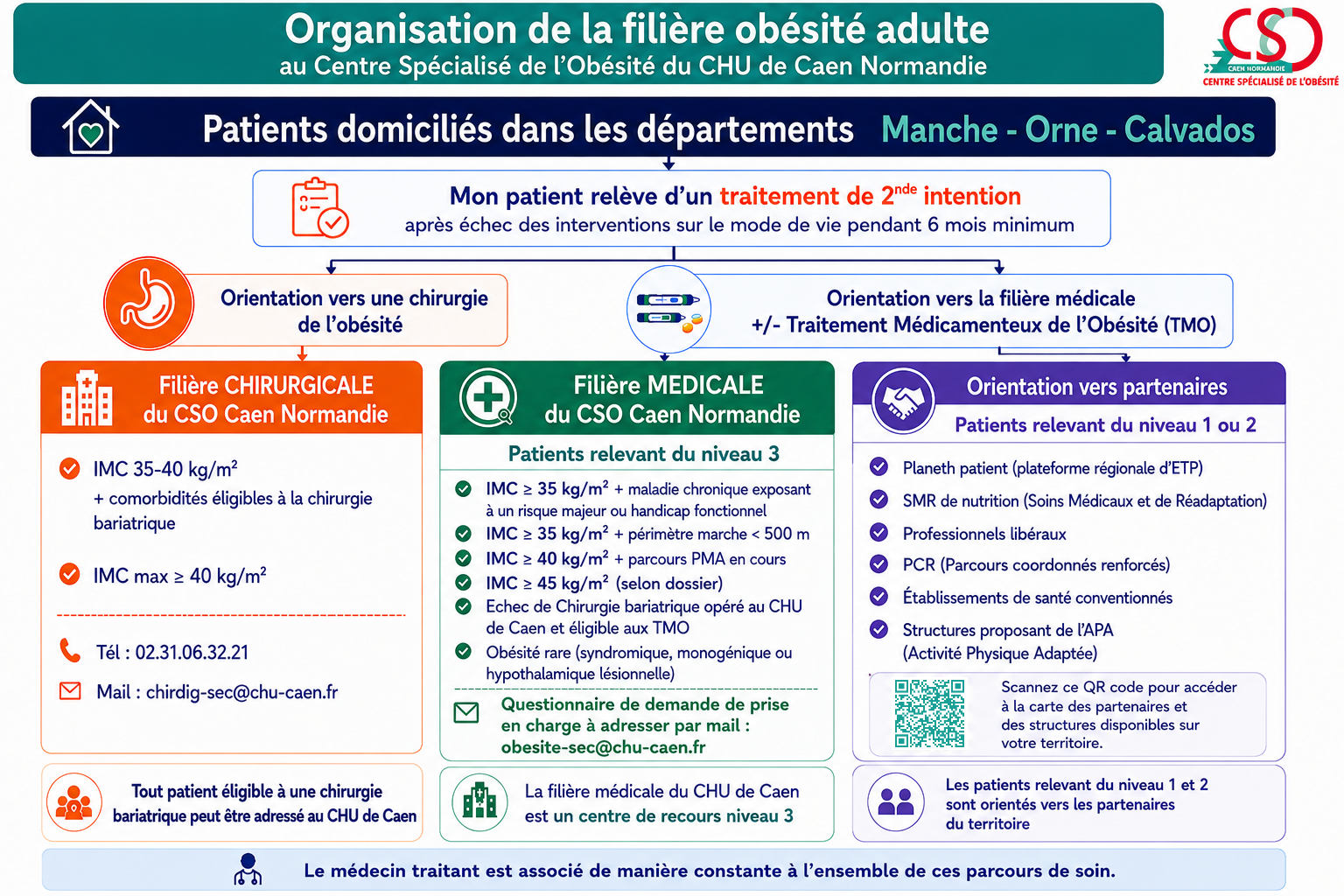
For guidance towards the surgical pathway at the CSO Caen Normandie:
- Telephone: 02.31.06.32.21
- Email: chirdig-sec@chu-caen.fr
For guidance towards the medical field at the CSO Caen Normandie:
- Referral questionnaire to download, complete, and give to your patient. They can then return it to us at the following email address: obesite-sec@chu-caen.fr





Cotentin Public Hospital Center Cherbourg Octeville
Saint-Lô Memorial Hospital
Argentan Hospital Center
Saint-Martin Private Hospital Caen – Ramsay Santé
Aunay-Bayeux Hospital Center
Alençon-Mamers Intercommunal Hospital Center
Notre Dame Clinic Vire
Jacques Monod Hospital Center, Flers
Brocéliande Clinic Inicea
SMR Nutrition of the Côte Fleurie Hospital Center
Private Hospital of the Bay of Avranches in Normandy
Institute of Physical Medicine and Rehabilitation of Bois de Lébisey in Hérouville Saint-Clair (IMPR)
The Manoir d'Aprigny de Bayeux - LADAPT - Pediatric SMR
PLANETH Patient – Head Office
Normandy Pediatrics · Childhood and Adolescent Obesity
GCS Axanté (DAC-CPTS)
Addiction Care, Support and Prevention Center (CSAPA) Caen Right Bank
BASTIE Karine (dietitian)
BAZIRE Aline (Dietitian)
Peggy Bidard (Dietitian)
DUPONT Laetitia (Dietitian)
ENGELHARD Bénédicte (Dietitian)
GOUBERT Louise (Dietitian)
Christine Gucciardi (Dietitian)
Christine Gucciardi (Dietitian)
GUILLOT Eléonore (Dietitian)
GUILLOT Eléonore (Dietitian)
HIRSON Julie (Dietitian)
HIRSON Julie (Dietitian)
JEAN Lucie (Dietitian)
JEULIN Isabelle (Dietitian)
JEULIN Isabelle (Dietitian)
LECHARDEUR Laurie (Dietitian)
QUESLIER Caroline (Dietitian)
SGHIRI Fatima (Dietitian)
TISSOT Céline (Dietitian)
TROUDE TIGHILET Sigrid (Dietician)
VANOT Armelle (Dietitian)


The time of shapes and the thirst for life (overweight, social circle, alcohol)
BASTIE Karine (dietitian)
BAZIRE Aline (Dietitian)
Peggy Bidard (Dietitian)
DUPONT Laetitia (Dietitian)
ENGELHARD Bénédicte (Dietitian)
GOUBERT Louise (Dietitian)
Christine Gucciardi (Dietitian)
Christine Gucciardi (Dietitian)
GUILLOT Eléonore (Dietitian)
GUILLOT Eléonore (Dietitian)
HIRSON Julie (Dietitian)
HIRSON Julie (Dietitian)
JEAN Lucie (Dietitian)
JEULIN Isabelle (Dietitian)
JEULIN Isabelle (Dietitian)
LECHARDEUR Laurie (Dietitian)
QUESLIER Caroline (Dietitian)
SGHIRI Fatima (Dietitian)
TISSOT Céline (Dietitian)
TROUDE TIGHILET Sigrid (Dietician)
