Aneurysm rupture: supporting patients with 3D printing

Department(s) concerned

News

Research

Aneurysm rupture: supporting patients with 3D printing

The Caen Normandy University Hospital is committed to developing and promoting paramedical research.

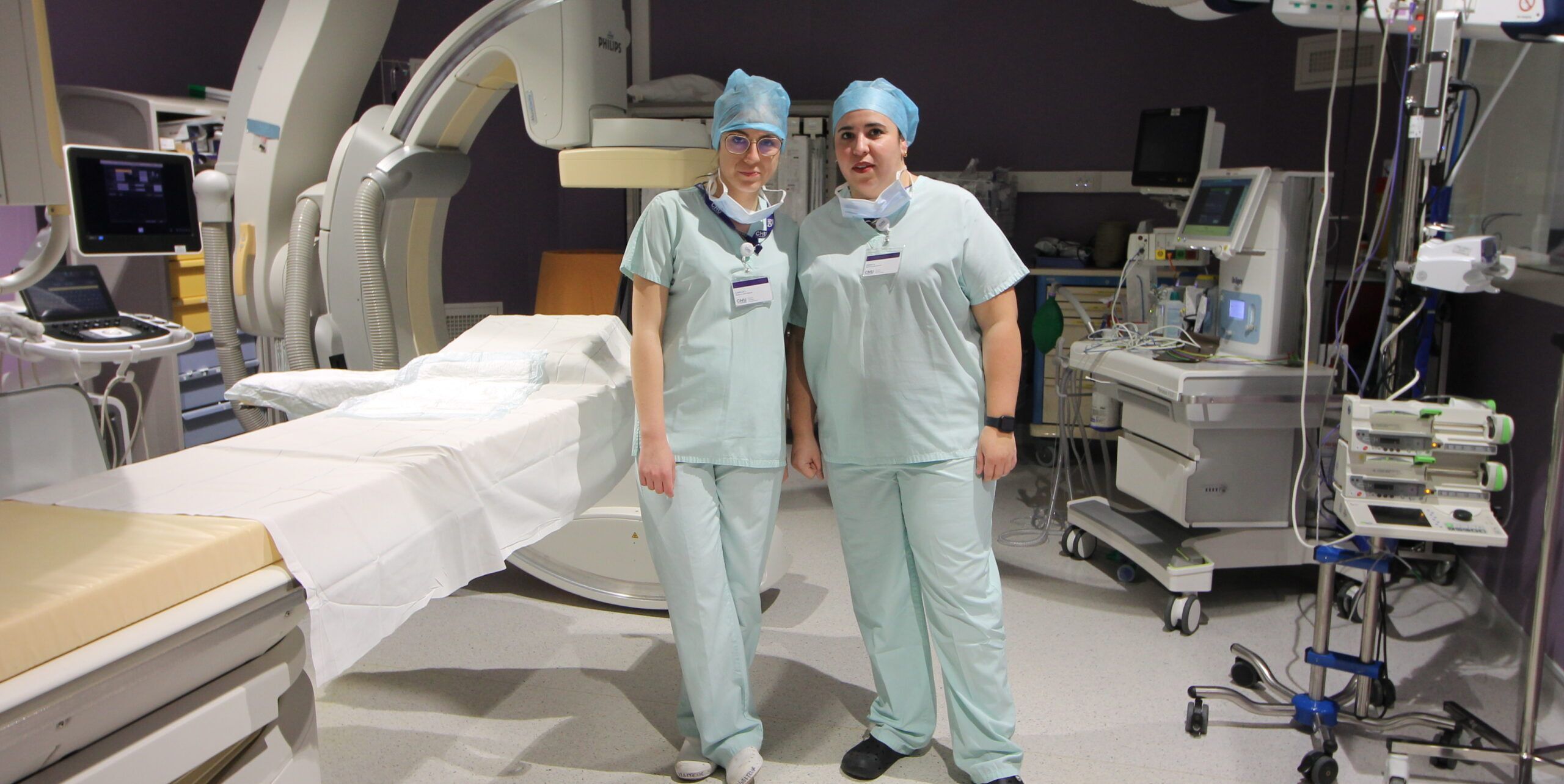
In a constant effort to provide the best possible care, paramedical teams create and develop innovative tools to serve patients. This is the case with Sarah Hemery and Camille Linski, medical radiographers ( MERM ), who created a 3D educational tool for patients with cerebral aneurysms.

Two medical radiographers are investing in research

In neuroradiology , the MERM ( Medical Emergency Radiology Technician) is one of the first points of contact for a patient with a cerebral aneurysm, after the physicians. Their role includes providing the best possible support by re-explaining the examination procedure before the patient enters the operating room.

During this consultation, the presentation of complex diagnoses and potentially risky treatments can cause anxiety and distress for the patient. In this context, Sarah and Camille designed a 3D-printed device called "Anxiflow," allowing them to clearly and visually explain the entire procedure to the patient to alleviate their fears.

Anxiflow is the first MERM funded at the University Hospital by the GIRCI * North-West as part of the 2023 paramedical project call.

Improving practices to advance the quality of care

3D printing of the vessels, creating a full-size silicone model called a "flow model," will allow for a simplified, concrete, and educational visualization of aneurysmal pathology. The "flow model" will represent the femoral arteries where the cerebral aneurysm to be treated is punctured, thus enabling a simulation of the treatment.

The project will begin in September 2024 with the creation of two groups: one receiving classic explanations about the operation and the second receiving illustrated explanations using the "flow model" so that the patient can observe the intervention and understand it with knowledge.

Objective: to compare the two groups to determine to what extent the use of this innovative support reduces patient anxiety and contributes to improving the quality of care and patient management.

The "flow model" was created with the help of Dr. Emmanuel Micault , an ENT passionate about surgical 3D printing, within the research platform of the Caen Normandy University Hospital where a space dedicated to 3D printing is being developed, and Dr. Charlotte Barbier, a neuroradiologist specializing in interventional imaging .

* Interregional Group for Clinical Research and Innovation

Communications Department of the Caen Normandy University Hospital
Caen Normandy University Hospital

Press contact

Communications and Sponsorship Department,
Avenue de la Côte de Nacre,
CS 30001
, 14033 CAEN cedex 9