Cross-Functional Clinical Nutrition Unit


-
-
-
Nutritional pathologies
MalnutritionMalnutrition deficiency in energy (kcal) and protein, leading to weight loss and muscle wasting . The consequences include a decrease in immune defenses (strength in fighting infections) , delayed wound healing, and generally, an increased length of hospital stay.
To detect malnutrition , it is necessary to know the BMI and weight loss of the hospitalized person.
Dietitians are on the front line in care units to address malnutrition, in collaboration with doctors.
The physicians in the Nutrition Unit provide expert advice in complex nutritional situations. They see in consultation who have medical problems related to malnutrition, for example:
- sequelae of digestive surgery,
- neurological pathologies,
- ENT pathologies ,
- celiac disease,
- vitamin or mineral deficiencies without an established cause…
The treatment for malnutrition is as follows, depending on the degree of malnutrition:
1) Adaptation of oral feeding
=> Enrichment of meals and fractionation and/or addition of specific high-calorie and high-protein foods (Oral Nutritional Supplements - ONS),
2) or artificial nutrition (via the digestive or intravenous route)
Artificial nutrition consists of providing a balanced nutritional solution adapted to the body's needs.
There are two routes of administration: the digestive route (enteral nutrition) and the venous route (parenteral nutrition).
- Enteral nutrition (via the digestive tract) is preferred because it is more effective, more physiological, and less risky. It can supplement insufficient oral feeding or be used exclusively if oral feeding is impossible.
Enteral nutrition is administered either through a nasogastric tube (a very thin, flexible, small-diameter tube) inserted through a nostril and directly into the stomach, or through a gastrostomy tube (a tube placed in the abdominal wall) inserted in the operating room. Enteral nutrition is provided using ready-to-use nutritional formulas in bags. - Parenteral nutrition (via intravenous route) is prescribed when oral (by mouth) or enteral (via a tube) feeding is impossible, insufficient or poorly tolerated.
Parenteral nutrition is administered into a vein via a catheter positioned either on the forearm (Picc-line), below the clavicle (central catheter), or on the chest (implantable port).
Intestinal insufficiency
Intestinal failure is a rare condition, the most common cause of which is short bowel syndrome following extensive intestinal surgical resection. The intestine is no longer able to absorb nutrients.
These patients therefore require long-term, and most often lifelong, home parenteral nutrition (HPN). HPN provides intravenous nutrition at home, meeting their fluid, electrolyte, and nutritional needs, while preventing potentially serious complications such as infections, liver disease, and osteoporosis.
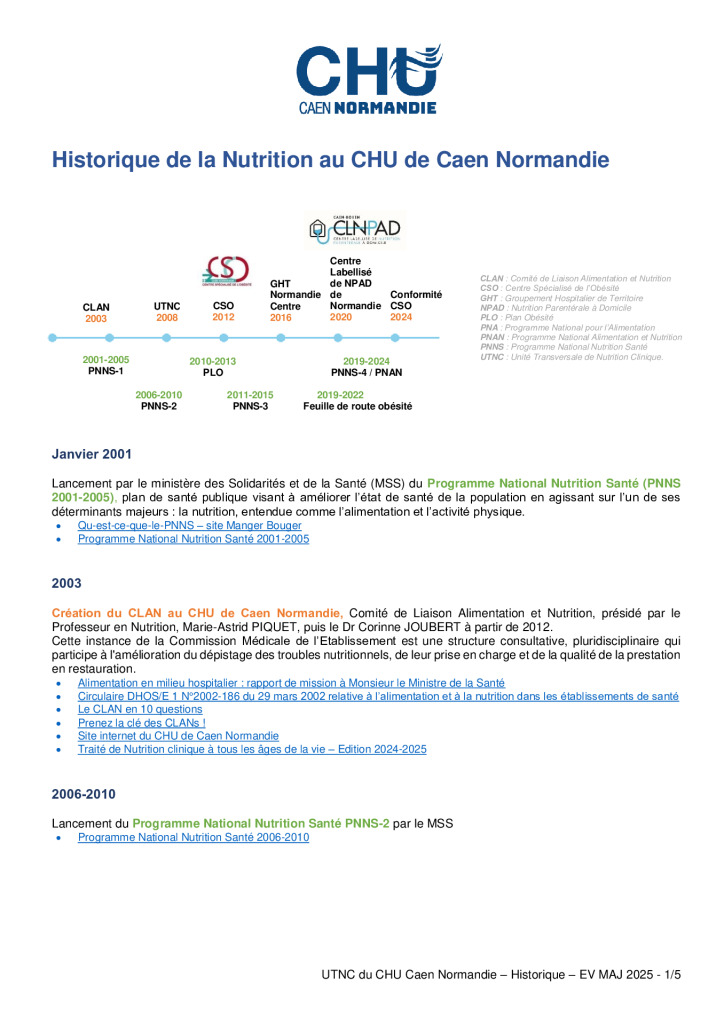
Normandy's leading institutions specializing in home parenting (NPAD) have joined forces to create a university center for NPAD in Normandy, bringing together existing expertise in the region. This center was accredited in 2020 by the DGOS (one of only 12 adult centers in France) . It includes the University Hospitals of Rouen and Caen, as well as the rehabilitation units of the Côte Fleurie and Croix Rouge Bois Guillaume hospitals.
It is based on 3 pillars:
- Optimizing the gradation of care and patient pathways
- Breaking down silos and standardizing care pathways
- Pooling of training and research activities
The Normandy establishments wanted to rethink the regional organization by associating the university hospitals that take care of patients in the acute intestinal failure phase and the education centers that provide rehabilitation and therapeutic education during the transition to the chronic phase, and thus streamline the patient journey.
The center's ambition is to better meet the needs of the territory, by taking care of all patients requiring it in accordance with the circular extending the obligation to take care in an expert center of patients in NPAD of more than 3 months, whereas the historical centers mainly took care of NPAD > 1 year.
The Centre's reference persons are, as a physician, Professor Marie-Astrid Piquet (CHU Caen Normandie) and as a pharmacist, Dr. Aude Coquard (CHU Rouen Normandie) .
Metabolic diseasesMetabolic diseases are pathologies caused by a disruption of the enzymatic pathways for the synthesis or degradation of molecules in the body (an enzyme is missing or an amino acid is deficient…) .
These disorders can be acquired (diabetes, obesity, etc.) or inborn. Inborn errors of metabolism are genetic diseases caused by a mutation in a gene coding for one of these enzymes. The symptoms result either from an accumulation of toxic substances upstream of the enzyme deficiency or from a deficiency in the synthesis of essential products downstream, leading to serious developmental consequences.
Four categories of diseases can be distinguished:
- Intoxication diseases : phenylketonuria, maple syrup urine disease, urea cycle deficiency, galactosemia, tyrosinemia, fructosemia, homocystinuria, Wilson's disease, porphyria, Lesch-Nyhan syndrome….
- Energy diseases: glycogenoses, mitochondrial cytopathies, abnormalities in fatty acid beta-oxidation, gluconeogenesis deficiency, Krebs cycle deficiency, creatine metabolism deficiency,….
- Overload diseases: lysosomal and peroxyzomal diseases….
- Other: protein glycosylation abnormalities, neurotransmitter metabolism abnormalities, sterol abnormalities
The clinical presentation varies depending on the organs affected by these enzyme deficiencies and the age of onset. It may involve isolated involvement of a single organ (cystinuria, for example) , but more often it involves multisystem involvement, particularly affecting the central nervous system and the liver.
Current treatments are based on different types of diet, vitamin supplements, and taking cleansing medications.
For patients with phenylketonuria, there have been recent developments that require extending their care throughout adulthood, whereas previously follow-up was stopped around age 18.
The adult and pediatric departments of the Caen Normandy University Hospital work in close collaboration with the Metabolic Diseases laboratory .
A multidisciplinary consultation may be offered to conduct a medical, dietary, and/or psychological and social assessment.
ObesityObesity, considered a chronic disease, results from an imbalance between energy intake and expenditure . This imbalance leads to an accumulation of reserves stored in adipose tissue.
Obesity corresponds to an excess of fat mass and a modification of adipose tissue which have harmful consequences for health .
The etiology of common overweight and obesity (as opposed to secondary obesity) is complex and multifactorial . Many factors, both modifiable and non-modifiable, have been identified as being associated with overweight and obesity: genetic and biological, psychological, sociocultural and environmental factors, including diet and sedentary lifestyle.
The clinical diagnosis of overweight and obesity relies in particular on calculating the Body Mass Index (BMI), a method that remains a simple way to estimate an individual's body fat. BMI is calculated by dividing weight (in kg) by the square of height (in meters) . According to the WHO classification, a BMI of 25 kg/m² or higher overweight a BMI of 30 kg/m² or obese
However, BMI gives an approximate indication because it does not necessarily correspond to the same degree of adiposity from one individual to another.
For children , you should refer to the growth charts found in their health records.
Another criterion is also taken into account to assess whether a patient is obese: waist circumference or abdominal girth. Excess fat mass in the abdominal region (fat around the internal organs) is indeed associated with an increased risk of diabetes and cardiovascular disease, as well as certain cancers, regardless of BMI.
When the waist circumference is greater than or equal to 94 cm in men and 80 cm in women (outside of pregnancy) , it is referred to as abdominal obesity.
Obesity is currently a public health problem worldwide and in our country. It affects 17% of the French population, and 19.8% in Normandy (according to the OBEPI-ROCHE 2020 survey) .
The consequences of obesity include an increased risk of various pathologies (including cardiovascular diseases, diabetes, certain cancers) , as well as infertility problems and osteoarticular pain…
- HAS Recommendations . Overweight and obesity in children and adolescents HAS 2003 recommendations : "Recommendations for clinical practice"
- Recommendations from the HAS (French National Authority for Health). Overweight and obesity in adults: primary care medical management.
- HAS recommendations . Overweight and obesity in children and adolescents .
The Specialised Obesity Centre of the Caen Normandy University Hospital, created in 2012, is one of the 37 French expert centres in the management of severe and/or complex obesity.
Overweight BMI ) greater than 25 and less than 30. Hospitalization is not indicated. Overweight management is handled by the primary care physician. International recommendations emphasize the need to stabilize weight through regular physical activity and a balanced diet.
Eating disordersEating disorders are characterized by eating behaviors that differ from those typically adopted by people living in the same environment. These disorders are significant and persistent, with both psychological and physical repercussions.
Anorexia nervosa
is characterized by a restriction of food intake leading to significant weight loss, coupled with an intense fear of gaining weight. A person suffering from anorexia nervosa feels constantly overweight and seeks to lose weight by any means necessary. This includes controlling the calories in all foods consumed. The individual has a distorted body image and fails to recognize the severity of their thinness.Anorexia nervosa can be associated with bulimic behaviors.
This obsession with weight loss under the influence of psycho-behavioral factors makes anorexia nervosa a psychiatric pathology requiring specific treatment.
Bulimia and binge eating disorder
are characterized by episodes during which the person compulsively consumes large quantities of food in a short period of time, at any time of day or night. These binge episodes are associated with a feeling of loss of control and are followed by inappropriate compensatory behaviors such as self-induced vomiting, the use of laxatives and diuretics, fasting between episodes, and excessive exercise. People with bulimia experience a loss of self-esteem and are not overweight due to these compensatory behaviors.Binge eating disorder is defined as recurrent episodes of binge eating not accompanied by compensatory behaviors (such as vomiting or laxative abuse) . Binge eating disorder typically leads to overweight or obesity and causes psychological distress.
The follow-up in consultation of anorexic or bulimic adults is provided by psychiatrists, who refer them for the nutritional aspect to the nutrition service.
In pathologies related to eating disorders, the use of multidisciplinary expertise is essential, including adult/pediatric physician, dietician, adapted physical activity educator, psychiatrist and/or psychologist trained in eating disorders.