Internal medicine
Internal medicine

Internal medicine

Internal medicine

Internal medicine is so named because it is practiced within the hospital. It is defined by the comprehensive care of patients, either because they have a disease affecting several organs simultaneously, or because they suffer from several diseases at the same time.

Internal medicine is so named because it is practiced within the hospital. It is defined by the comprehensive care of patients, either because they have a disease affecting several organs simultaneously, or because they suffer from several diseases at the same time.

Consultations & Team

Internal medicine

Pr A. Aouba, Dr G. Maigne, Dr Martin Silva, Dr Boutemy, Dr Audemard, Dr De Boysson, Dr Watelet
Consultation hours

    Service composition

    • 2 University Professors · Hospital Practitioners
    • 4 Hospital Practitioners
    • 2 University Clinical Heads · Hospital Assistants
    • 1 Senior Health Executive
    • 1 Health professional
    • 1 Social worker
    • 1 Research Engineer
    • Nurses
    • Caregivers
    • Service agents

    Our services

    Internal medicine

    The specialty of the internal medicine department lies in systemic diseases, meaning those that can affect multiple organs simultaneously. These diseases can be inflammatory in nature, often autoimmune (caused by antibodies directed against specific organs). Examples include systemic lupus erythematosus, Sjögren's syndrome, scleroderma, polymyositis, sarcoidosis, mastocytosis, histiocytoses, and vasculitis (such as giant cell arteritis, granulomatosis, etc.).

    These are mostly chronic illnesses requiring regular monitoring within the department, in collaboration with the patient's primary care physician and organ specialist(s) (for example, cardiologist, pulmonologist, dermatologist, ophthalmologist, etc., depending on the organs affected). The department synthesizes these often complex cases and coordinates care.

    The service is labeled "Center of Expertise for Rare Diseases and Systemic and Autoimmune Diseases, Immune Deficiencies and Hereditary Angioedema" : it works in close collaboration with the various national reference centers to offer the patient the best care, adapted to the most current knowledge.

    At the request of the attending physician or specialist, the department receives patients for consultation and/or hospitalization whose illness has not yet been identified despite various investigations. Laboratory and imaging tests, responses to administered treatments, and clinical examination data are all pieces of a puzzle that must be considered together to reach a diagnosis. In this capacity, the department provides evaluations for persistent fever, weight loss, phlebitis, or recurrent pulmonary embolism .

    A significant part of the department's activity concerns patients admitted to the medical emergency department for reasons as diverse as malaise, anemia, infection, phlebitis, stroke, cancer... Internal Medicine takes care of these patients in their entirety, particularly when several associated pathologies make things complex.

    The conditions for the proper care of these patients are also taught to students.

    Note:
    For more information on the specialty of internal medicine, please visit: www.snfmi.org

    The clinical activity of the "Department of Internal Medicine and Clinical Immunology" is focused on two main areas: consultation and hospitalization

    Hospitalization

    Hospitalization in the department takes place according to four modalities:

    • by direct admission at the request of the attending physician after agreement from the medical team,
    • after prior consultation with a doctor in the department,
    • after admission to the Emergency Reception and Treatment Department (DATU) of the University Hospital,
    • by transfer from another department or establishment.

    This hospitalization follows the traditional model. TheHPDD (Psychiatric Hospitalization and Diagnosis Unit) can meet the needs for further investigation in various pathological situations. It provides valuable time for establishing a diagnosis and takes into account the need to control healthcare costs.

    Day Hospitalization (DH) primarily allows for the periodic administration of various intravenous treatments such as immunosuppressants, immunoglobulins, transfusions and infusions of coagulation factors.

    During their visits, doctors interview and examine patients. They meet, by appointment, with the family of the patient who requests it.

    The consultation

    Consultations are the secondmajor focus of the service: four full-time doctors provide consultations throughout the week. These consultations are open to all patients, preferably referred by their primary care physician or another specialist.

    In addition to hospitalization and consultations, the service provides a telephone hotline 6 days a week for all doctors in the Lower Normandy region.

    Centers of Expertise

    Rare Disease Competence Center
    Rare Disease Competence Center
    Rare Disease Competence Center

    Research & teaching

    Education

    The service provides a teaching mission (courses at the faculty of medicine, practical internships) to students in medicine, pharmacy and nursing.

    Postgraduate training (EPU) is also provided to other specialists.

    Clinical research

    Finally, the department participates in clinical research projects. It conducts numerous national and international studies, particularly in the context of Horton's disease, vasculitis, scleroderma and lupus.

    Giant cell arteritis

    In giant cell arteritis (Horton's disease), the Internal Medicine department of the Caen Normandy University Hospital is initiating research projects on the following themes:

    • Description of the different initial and progressive forms of the disease
    • Analysis of damage to the large blood vessels (aorta and its branches)
    • The role of imaging in the diagnosis and monitoring of giant cell arteritis
    • Analysis of circulating microparticles in giant cell arteritis (MICROGIANT protocol).

    From a therapeutic standpoint:

    • Use and efficacy of Anakinra and/or combination with corticosteroid therapy (GIANT protocol)
    • Comparison of two corticosteroid therapy tapering schemes (CORTODOSE protocol)

    Analysis of rare associations:

    • Giant cell arteritis and malignant pathologies
    • Organ localizations related to giant cell arteritis.

    Patients diagnosed and monitored at the Caen Normandy University Hospital in the Internal Medicine department for giant cell arteritis have the option to accept or refuse to have their data used in these studies.

    For any information regarding these studies, you can contact your referring physician or our secretariat:

    The latest news related to the service…

    Locate / contact the service

    Internal medicine

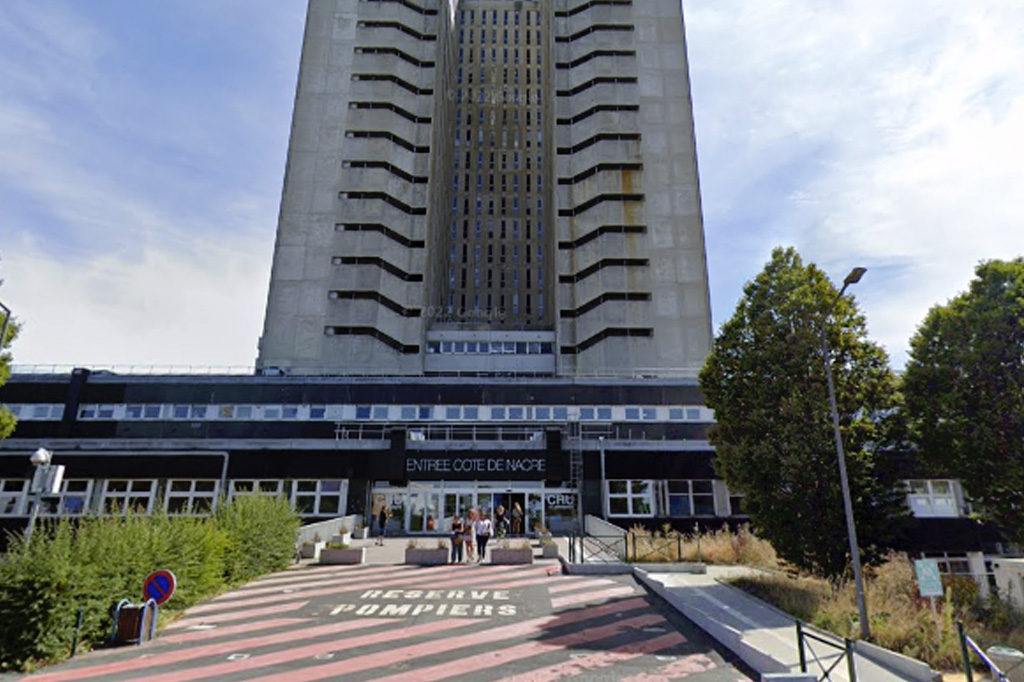
    Côte de Nacre Hospital

    Avenue de la Côte de Nacre CS 30001 14033 Caen cedex 9

    Internal medicine

    Secretariat of the department


    LevelGPS accessParkingEntrance
    Consultation area · Gate M
    Mother-of-Pearl Coast Tower
    Level : 1
    GPS access: Côte de Nacre
    Parking: Parking 2
    North Entrance to the Côte de Nacre
    Service
    Mother-of-Pearl Coast Tower
    Level : 18
    GPS access: Main
    Parking: Parking 1
    Main entrance of the Caen Normandy University Hospital