
Intensive Care Medicine · Resuscitation
Intensive Care Medicine · Resuscitation
The Intensive Care (ICU) at Caen University Hospital is the only medical intensive care unit in the region. It comprises two 11-bed intensive care units (including two specific rooms allowing for sterile isolation for the care of immunocompromised patients requiring intensive care), and four continuous monitoring beds.
This service is at the heart of the referral center for the departments of Calvados, Manche, and Orne, which together serve a population of approximately 1.45 million inhabitants. For example, it is a center of expertise for dysimmune pathologies such as thrombotic microangiopathies (CCR-MAT), which all local hospitals refer to the Caen Normandy University Hospital for intensive care.
The Intensive Care (ICU) at Caen University Hospital is the only medical intensive care unit in the region. It comprises two 11-bed intensive care units (including two specific rooms allowing for sterile isolation for the care of immunocompromised patients requiring intensive care), and four continuous monitoring beds.
This service is at the heart of the referral center for the departments of Calvados, Manche, and Orne, which together serve a population of approximately 1.45 million inhabitants. For example, it is a center of expertise for dysimmune pathologies such as thrombotic microangiopathies (CCR-MAT), which all local hospitals refer to the Caen Normandy University Hospital for intensive care.

Team
Service composition
- 1 University Professor · Hospital Practitioner
- 7 Hospital Practitioners
- 1 University Clinic Head · Hospital Assistant
- 1 Senior Health Executive
- 2 Health Executives
- 2 Secretaries


The research
Clinical research
The medical team supports significant clinical research activity with publications in high-impact international journals from clinical studies that are either initiated locally or are multicentre with local participation.
The main research areas pursued by the various practitioners within the department are:
- central venous catheters,
- acute renal failure,
- Cardiopulmonary arrest,
- lower respiratory tract infections,
- acute neurology.
Close collaborations exist with
- the U2RM–EA4655 microbiology laboratory of the Caen University Hospital,
- or with the UMR -S 1237 INSERM -UCBN laboratory at the Cycéron center, which constitutes a center of excellence in the field of neuroscience and develops in particular preclinical research models on acute neurovascular and neuroinflammatory pathologies.
Some key publications from the service are presented in the attachments.
An explanatory document on what biomedical research is and the rights of patients and users is available as an attachment.
Publications

Biomedical Research

CVC Infection Prediction – CC 2022

CVC Infection – CMI 2020

HVAC 3SITES – NEJM 2015

HVAC HDI – JAMA 2008

Covid-19 ICU – ICM 2020
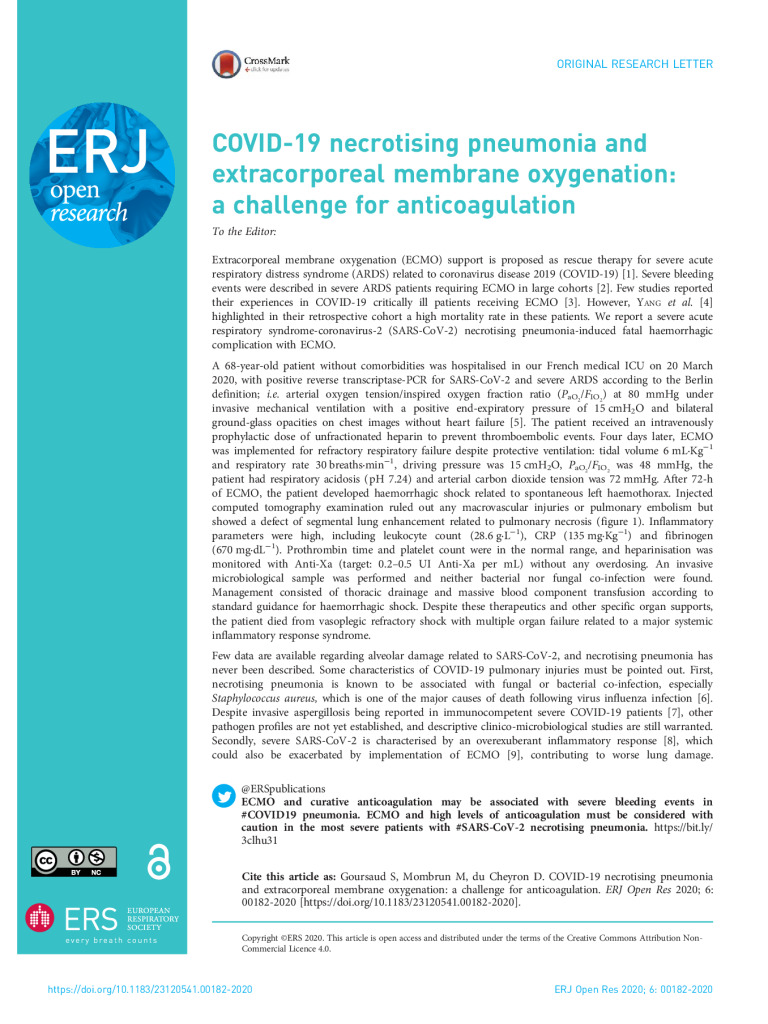
COVID-19 ECMO Necrotizing Pneumonia – ERJOR 2020

Covid-19 COVAPID – ICM 2021

Covid-19 Corticosteroids – J Infect 2020

Covid-19 Lymphadenopathy – Lancet Infect 2020

AKI RFE EER – AIC 2015

AKI HYDRAREA – CCM 2017

Côte de Nacre Hospital
Intensive Care Medicine · Resuscitation
Family visits are permitted from 2 p.m. to 11 p.m

| Level | GPS access | Entrance | |||
|---|---|---|---|---|---|
Intensive Care Medicine · Resuscitation Côte de Nacre Hospital | Level : 16 | GPS access: Main |  |
